
Yet most medical specialists avoid video entirely. The reasons are always the same:
- “I do not like being on camera”
- “I do not know what to say”
- “It seems too expensive”
- “I do not have time”
Every one of these objections has a practical solution. And the practices that overcome them gain a significant competitive advantage.
Why Video Works for Medical Practices
Trust Building
Video allows patients to see and hear you before they meet you. This is enormously powerful in healthcare, where trust is everything. A patient who has watched a video of you explaining a procedure feels like they already know you when they walk through your door.
SEO Benefits
- Video results appear in Google search, giving you additional real estate
- YouTube videos rank in Google for many medical search queries
- Pages with embedded video have higher engagement metrics, which supports rankings
- Video content generates backlinks and social shares
Patient Education
Video is the most effective format for explaining complex medical procedures. Animated diagrams, procedure walkthroughs, and recovery guides are all more effective in video format than in text.
Competitive Advantage
In most medical specialties, very few practitioners create video content. This means less competition and a larger opportunity to stand out.
In a market where most specialists avoid video, the ones who embrace it own an entire channel with minimal competition.
1. Procedure Explanations
Short (2 to 5 minute) videos explaining what a specific procedure involves. These answer the patient’s most common question: “What will actually happen?”
Structure:
- Brief introduction (who you are and why this topic matters)
- What the procedure involves step by step
- What patients can expect during recovery
- Common questions answered
- Call to action (book a consultation to discuss your specific situation)
2. FAQ Videos
Answer one question per video. These are quick to produce and directly match how patients search:
- “How long do dental implants last?”
- “What is the difference between Invisalign and traditional braces?”
- “How painful is wisdom tooth removal?”
Each video should be 1 to 3 minutes and focus on one specific question.
3. Practice Tour Videos
Show patients what your clinic looks like before they visit. This reduces anxiety and builds familiarity:
- Reception area and waiting room
- Treatment rooms and technology
- Team introductions
4. Educational Series
A series of videos covering a broader topic in depth:
- “Your complete guide to orthodontic treatment” (5 to 8 episodes)
- “Understanding cosmetic dentistry” (4 to 6 episodes)
- “Preparing for surgery” (3 to 5 episodes)
Series content keeps patients coming back and builds a library of valuable resources.
Production: Keeping It Simple
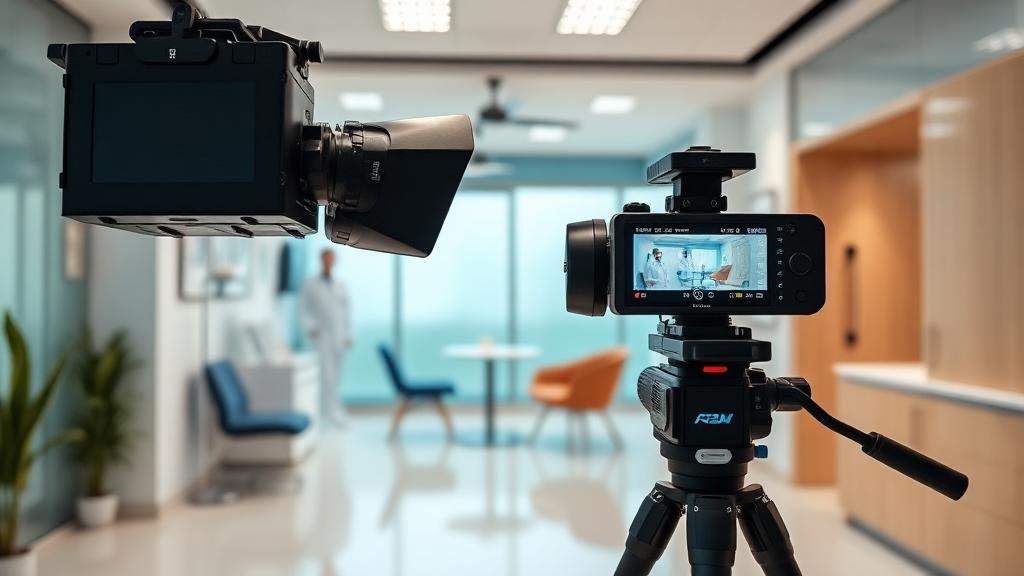
You do not need a film crew. Most successful medical practice videos are filmed with:
Equipment
- Camera: A recent smartphone (iPhone or Samsung Galaxy) is more than adequate
- Audio: A clip on wireless microphone ($50 to $100) dramatically improves sound quality
- Lighting: A ring light ($30 to $80) or filming near a window with natural light
- Tripod: A basic smartphone tripod ($20 to $40)
Total investment: $100 to $220 for equipment that will produce professional looking content.
Setting
Film in your practice. This is authentic and shows patients where they will be treated. Choose a clean, well lit area with minimal background distractions.
Format
Talking head: You speaking directly to camera. This is the simplest format and the most effective for building trust.
Screen recording: For explaining diagrams, X rays, or treatment plans (with patient information removed).
B roll with voiceover: Footage of your practice or treatment process with your narration over the top. This is easier for practitioners who are uncomfortable speaking directly to camera.
Overcoming Camera Reluctance
Start Small
Your first video does not need to be perfect. Film a 60 second answer to a common patient question. Watch it back. Film it again if needed. The more you practice, the more natural it becomes.
Use a Script (But Don’t Read It)
Write bullet points of what you want to cover, not a word for word script. Reading a script on camera looks unnatural. Speaking from bullet points looks conversational and genuine.
Remember Your Audience
You are not performing for the internet. You are talking to a patient who has a question. Speak as you would in a consultation: clearly, directly, and with genuine interest in helping.
It Gets Easier
Every practitioner we have worked with says the same thing: the first video is the hardest. By the fifth video, it feels natural. By the tenth, they actually enjoy it.
YouTube Optimisation
If you are going to invest in video, YouTube should be your primary platform. Here is how to optimise:
Titles
Use the exact question patients search for:
- “How Much Do Dental Implants Cost in Australia? (2026 Guide)”
- “Invisalign vs Braces: Which Should You Choose?”
Descriptions
Write detailed descriptions (300+ words) that:
- Summarise the video content
- Include relevant keywords naturally
- Link to your website and booking page
- Include timestamps for longer videos
Thumbnails
Custom thumbnails with:
- Your face (builds recognition)
- Large, readable text
- Contrasting colours
- Consistent branding across all videos
Tags and Categories
Use relevant tags and categorise videos appropriately. Include your location in tags for local visibility.
Repurposing Video Content
One video can generate multiple pieces of content:
| Source Video | Repurposed Content |
|---|---|
| 5 minute procedure explanation | Blog post (transcription), 3 social media clips, newsletter feature |
| FAQ video (2 minutes) | Social media post, website FAQ entry, Google Business post |
| Practice tour | Website embed, social media reels, new patient email |
This makes video production extremely efficient from a content marketing perspective.
Getting Started: Your First Month
Week 1: Order equipment and set up your filming area
Week 2: Film 3 FAQ videos (one question each, 1 to 2 minutes)
Week 3: Edit and publish, optimise for YouTube
Week 4: Film 1 procedure explanation video (3 to 5 minutes)
By the end of month one, you will have 4 videos published and a process you can repeat monthly.
If you want guidance on building a video strategy for your practice, you are welcome to get in touch. We help specialists develop video content that builds trust and drives patient enquiries.